
Why Are More Americans Overweight than Europeans?
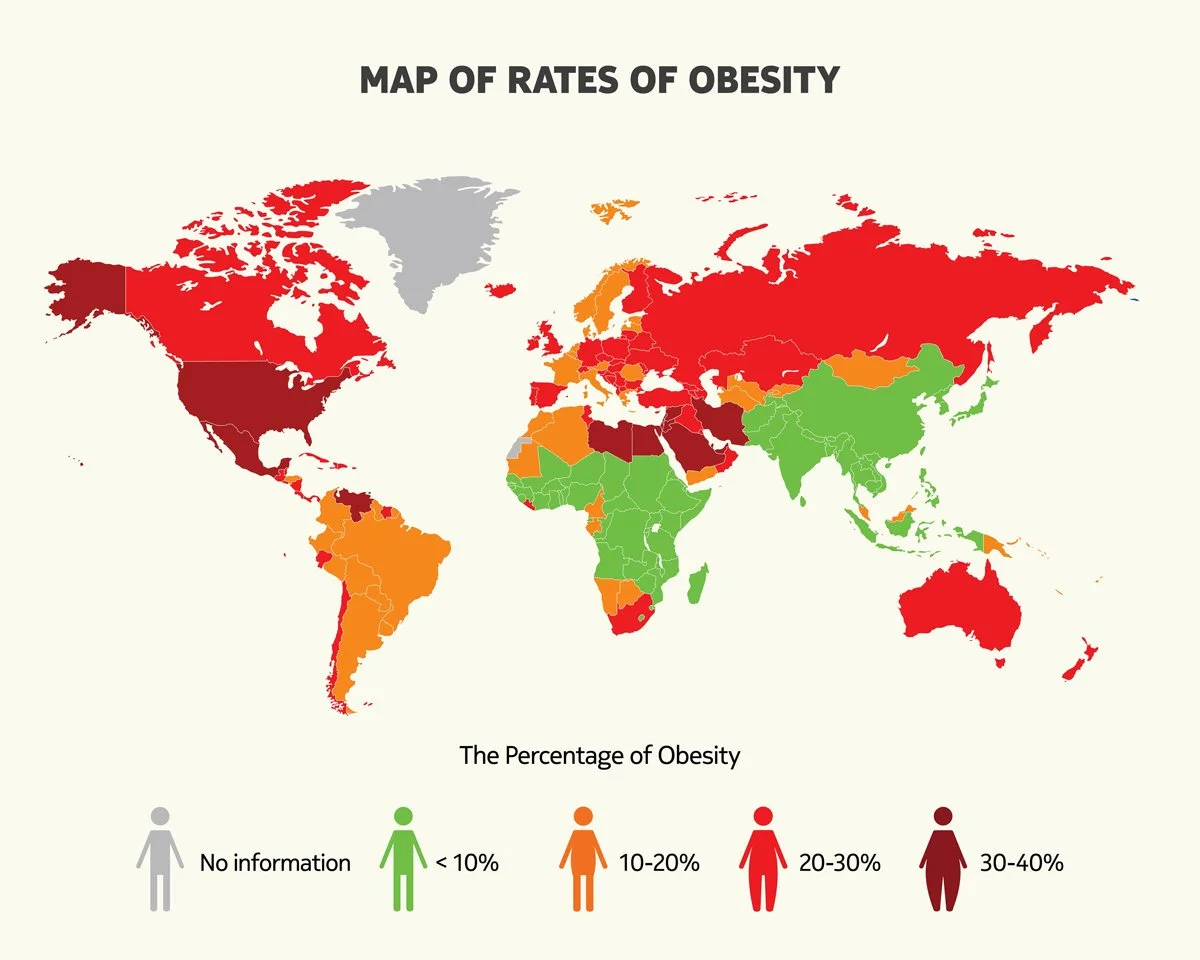
Do you spend spare time scrolling through your social media feed? Then you’ve likely seen this graphic:

Yes, that is the US at the top of obesity ranking. The chart was shared more than 160 times from a single X account and viewed more than 33,000 times. And that’s just one account, so it’s fair to say US vs European obesity is certainly having a moment. But why is there such a gap between our obesity rates and those of European countries? While some social media influencers are using the data to boost their particular brand, the causes of obesity are complex and it’s unlikely that fixing a single cause could move us all closer to a European level of fitness. Still, we can examine our differences and maybe even find a few healthy European ideas to steal:
Diet Culture: It’s likely no coincidence that the European areas with the lowest obesity rates tend to be in the south and west, where the rates are often under 15%. Those are also the areas most likely to follow a Mediterranean diet rich in fresh fruits and vegetables, whole grains, fish, and healthy fats. It’s no surprise that what you put on your plate is just as important as how much goes on your plate, and any reputable weight loss program will recommend a well-balanced menu similar to the Mediterranean diet. Feeding your body all the protein and nutrients it needs without filling up on empty calories is an obvious solution to maintaining a healthy weight, and developing a culture where that cuisine is expected makes it easier to make good food choices.
WHAT TO STEAL FROM THE EUROPEANS: Create a home culture where fresh, healthy food choices are a habit.
Social Culture: Did you know that a two hour lunch break once was standard in many European countries? The extra time allowed school children and workers to go home for a home-cooked meal and enjoy it with their families, turning the lunch into more of a social enrichment than just a break to fill their bellies. Saveur wrote about these leisurely European lunches in 2016 but even then noted that in France, the country that still happens to have the European’s lowest obesity rate at 11%, the tradition was already fading.
It would be a shame if Europe lost its emphasis on social eating, as breaking bread together is such a fulfilling act that it even finds its way into scripture. Plus complementing the meal with good conversation can slow down the fork to mouth action and help us feel full with less food intake.
WHAT TO STEAL FROM THE EUROPEANS: Create a leisurely meal and enjoy it with others.
Home Cooking: We all know fast food is almost always terrible for the waistline and, while it’s no guarantee that home cooked meals will be healthier, preparing meals in your own kitchen allows you to control fat, salt and sugar content and generally choose healthier options. And it may be no surprise that Europe leads the world in home-cooked meals, with Cookpad reporting that Europeans prepare an average of 7.8 home-cooked meals per week while Northern Americans prepare 6.9.
WHAT TO STEAL FROM THE EUROPEANS: Add at least one more home-cooked meal to your weekly routine.
Smaller portion sizes: Anyone who has visited Europe has noticed there’s less on the plate there. There’s even a term for our larger portions: an American serving. The website Zavamed has a visualization of the portion differences comparing the US to European countries for everything from Schitzel to burgers to fish and chips.
Of course there’s nothing stopping a European from piling more on their plate at home, however smaller restaurant portions may be one more reason Europeans are less likely to be overweight. It’s often said we eat with our eyes, and training our eyes to be content with smaller servings may help our appetites make the same adjustment.
WHAT TO STEAL FROM THE EUROPEANS: Pile a little less onto your plate.
More walkable cities: According to The Guardian, 99.2% of Zurich, Switzerland residents live within a 15-minute walk of just about everything they need in their daily lives: groceries, medical care, schools, etc. Certainly Europeans have their suburbs and rural areas just as Americans do but our sprawling growth led us to the bottom of the walkability rankings.
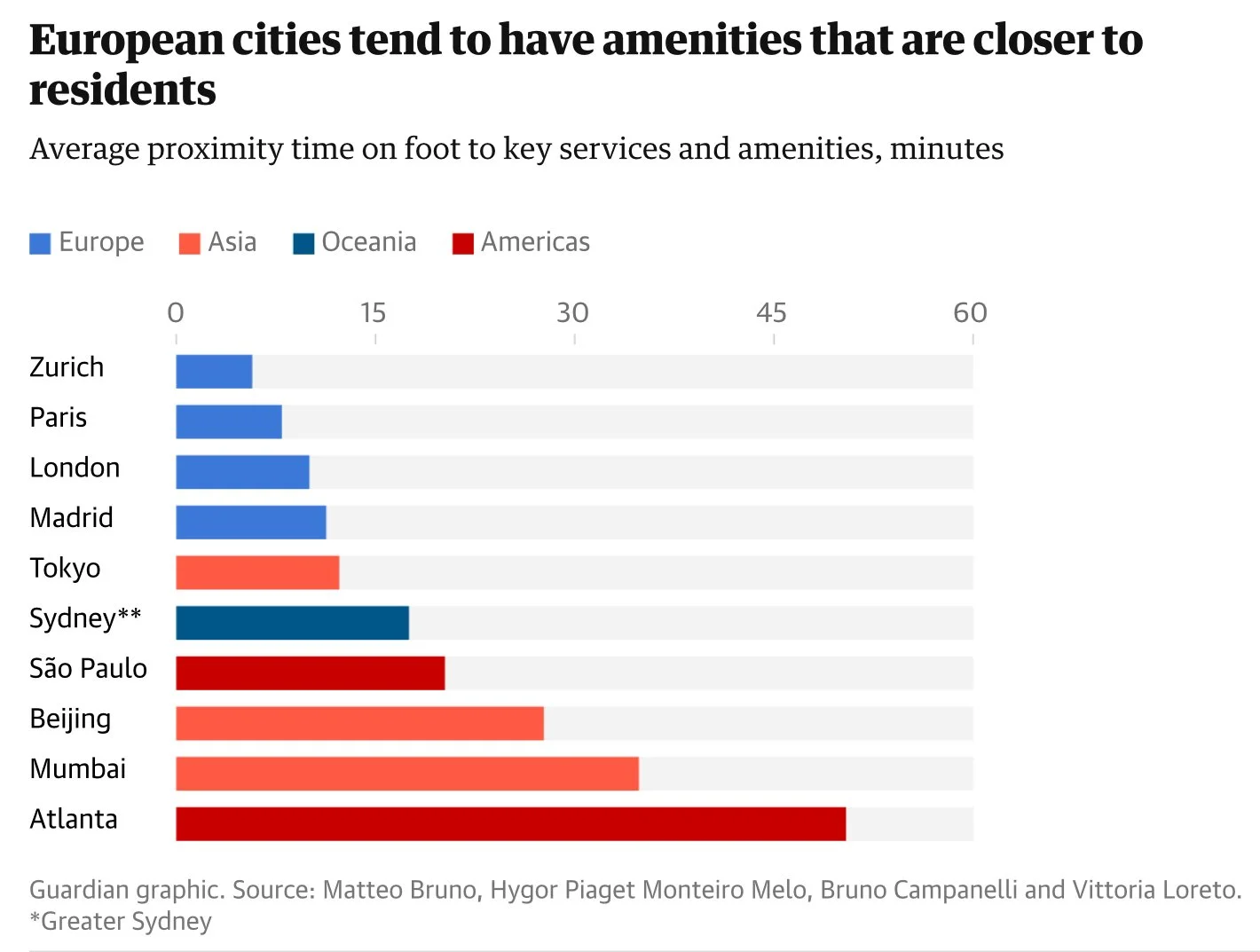
Why does walkability matter? A ten minute walk burns an average of 40 calories and you can double that to 80 calories per 20 minute round trip. Repeat that walk every day and you can lose eight pounds in a year. Or avoid eight pounds of weight gain. You may question whether walkability translates to actual walking or if Europeans really grab their car keys just as Americans do, but the heavy use of public transportation couldn’t exist without many Europeans making their daily walk to the bus stop, train station or subway. Plus eyeballs don’t lie, and the difference between the barely used sidewalks of Springfield and the crowded sidewalks of walkable cities such as Paris or even our own New York City is remarkable. Walkable cities burn calories.
WHAT TO STEAL FROM THE EUROPEANS: Skip the car keys when you can and build a walk into your daily errands.
Food Regulations: This is where the controversy starts. Many point to stricter European food standards, banning some of the additives and growth hormones which are permitted in the US, as a contributor to European’s lower BMIs. However, judging which research is most accurate and which regulations best balance potential health effects against farm production is frankly above our pay grade. The evidence we’ve seen has convinced us though that ultra processed foods are detrimental to our health and may even be responsible for some dementia. We shared that information earlier in Hidden Dangers of Ultra Processed Foods.
WHAT TO STEAL FROM THE EUROPEANS: Avoid ultra processed foods and use your judgment on which additives to avoid.