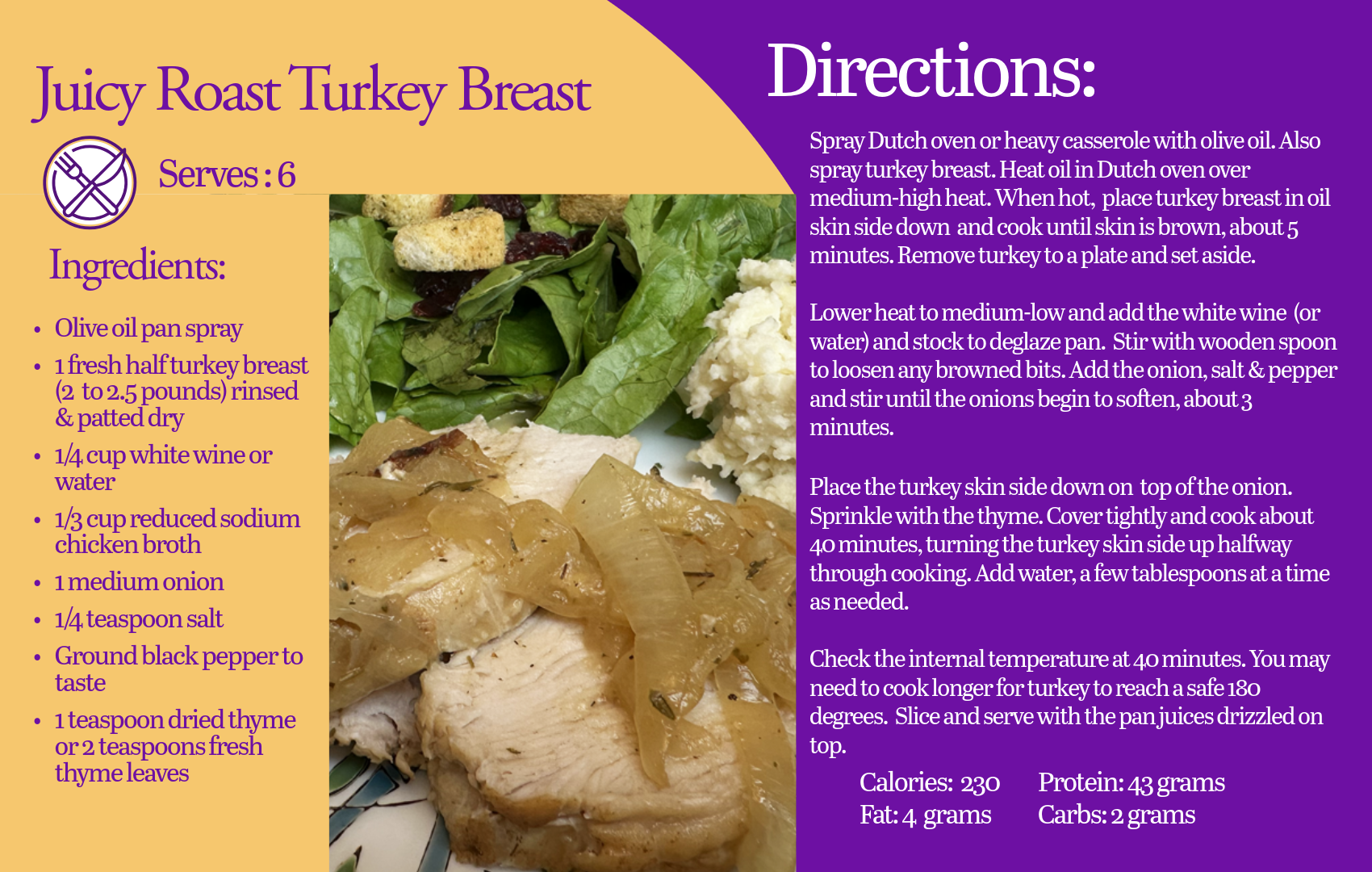
Recipe: Juicy Roast Turkey

For a holiday that’s all about the feast, we should be grateful the star of the Thanksgiving table is turkey. Few meats deliver as much protein with such small counts of fat and calories as the overachieving turkey. But when some marketing team decided to add a pop-up thermometer to your frozen Butterball, they may have ruined our enjoyment of this magical bird. Most of us don’t roast a turkey more than once a year and our inexperience makes it too easy to just watch for the thermometer to do its thing. The result? Usually that’s an overcooked and dry turkey. But not with this recipe, which turns a turkey breast into a flavorful and juicy main dish you’ll be proud to serve your family. And the bonus is that it’s healthy! Bonus #2? It roasts on the stovetop, so your oven stays free for fresh-baked bread, roasted veggies, or your pumpkin pie.
Feel free to skip to the recipe at the bottom of this page but this recipe really benefits from the helpful tips we discovered while preparing it, so you’ll probably want to keep reading.
First, the ingredients—which are turkey breast, onion, olive oil, chicken bouillon, thyme, wine, salt and pepper. Head’s up that you have some substitution options listed in the tips.
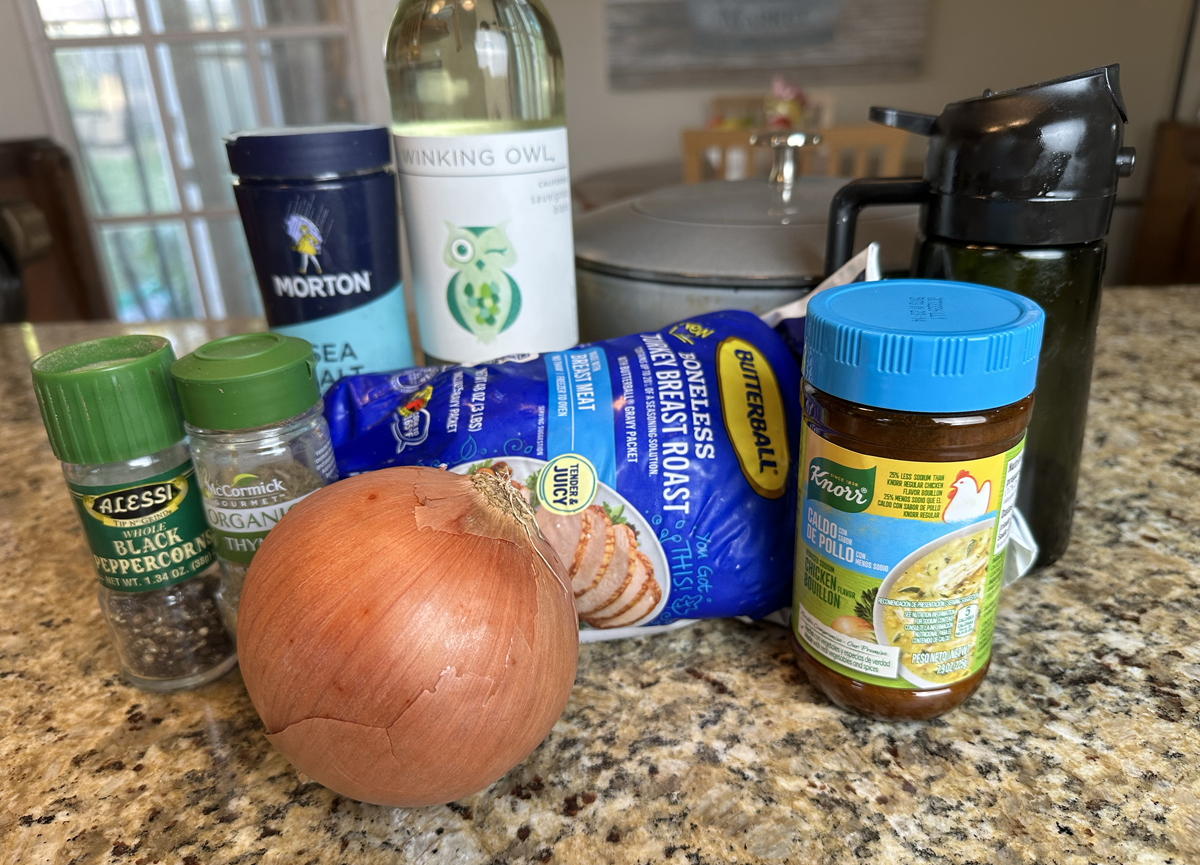
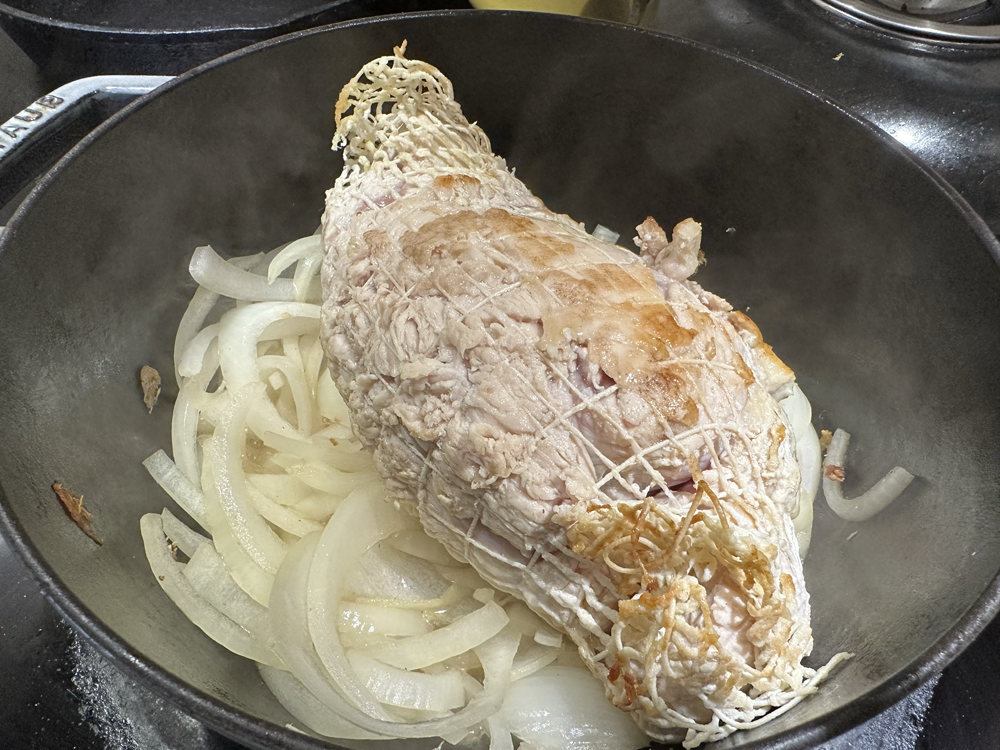
First substitution? The fresh half turkey breast. Likely the shelves will be better stocked closer to the Thanksgiving holiday but my store only offered the frozen and boneless Butterball turkey breast you see pictured. Without the bone to give it structure, it came held together in a culinary string netting. I browned and roasted it in the netting but there was no skin, so your breast won’t look exactly like the photos if you’re using the specified bone-in. No worries, as it will roast deliciously either way and having the option of using the packaged turkey roast could make this recipe a year round favorite.
Not a substitution but the recipe gives you the option of roasting your turkey breast in a heavy casserole or a Dutch oven. I highly recommend buying a Dutch oven if you don’t already own one. Mine is Staub brand and is enameled cast iron. It really does act like an oven, holding the heat and circulating it around whatever you are cooking. The heavy lid holds in the heat and the juicy goodness, improving almost any recipe.
Pro Tip: If you don’t have a lidded casserole or a Dutch oven, you can make a lid from several layers of aluminum foils wrapped tightly to your pot.
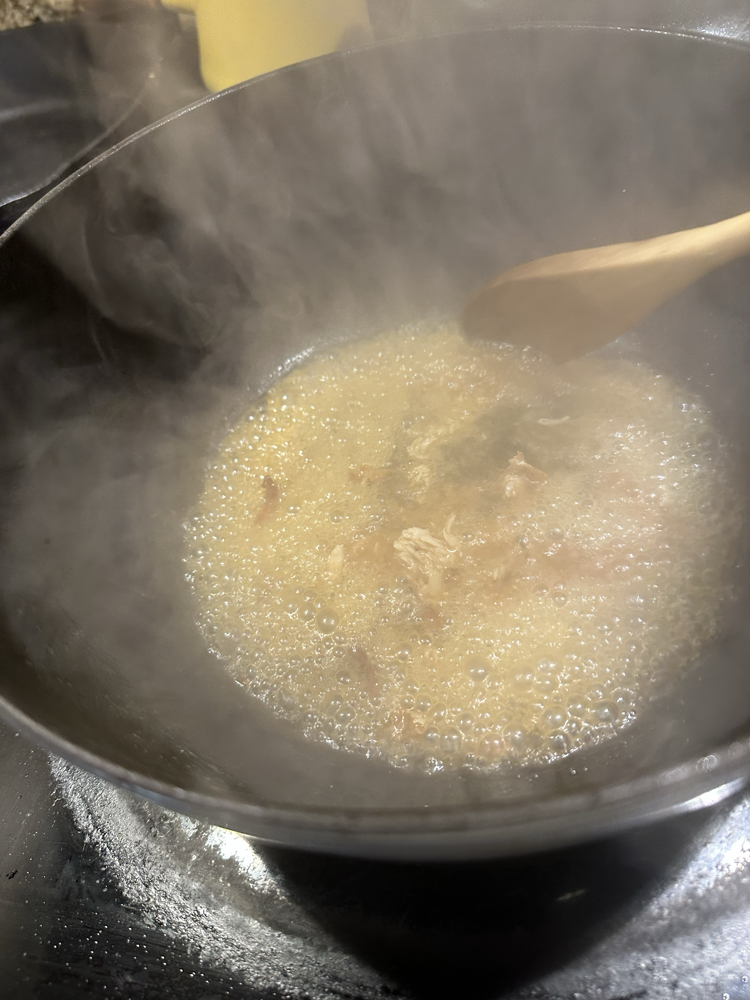
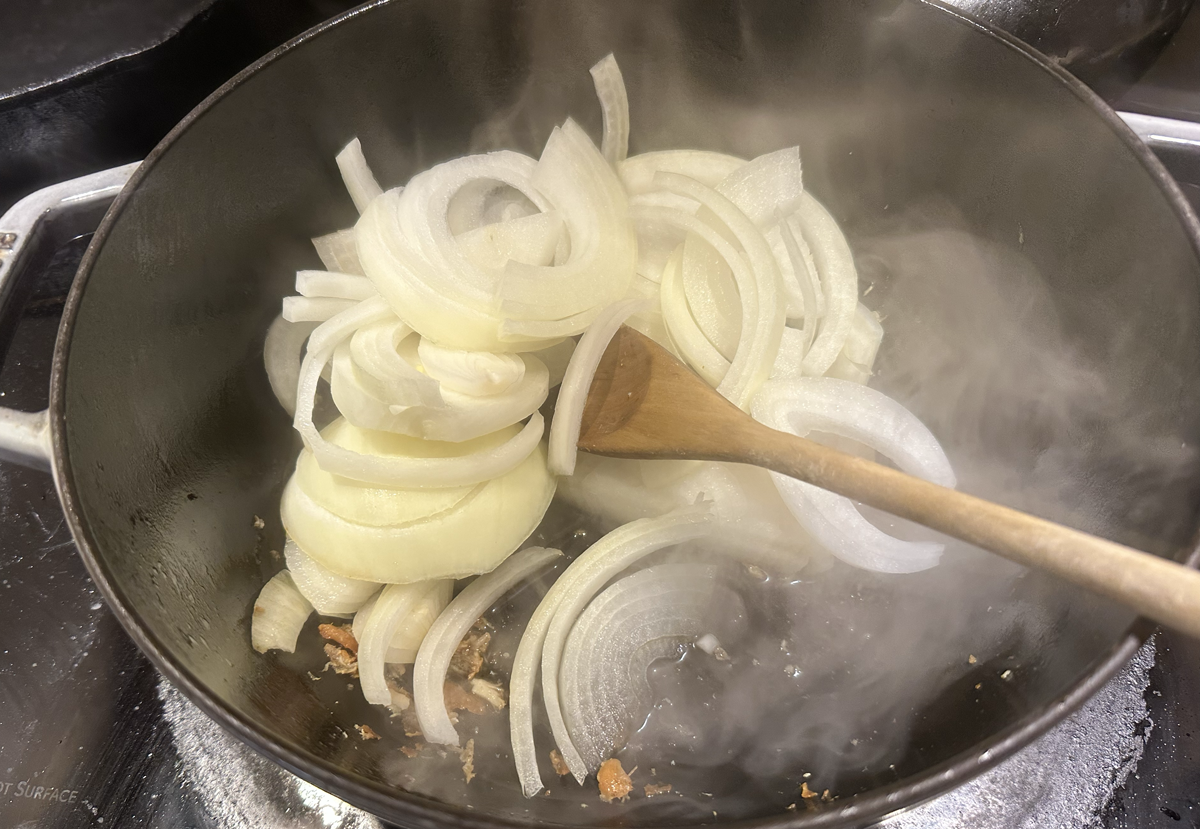
Once you decide what to use to cook your turkey breast, spray it and the turkey with olive oil spray, then heat your Dutch oven on the stovetop at medium-high heat. Once hot, add the turkey breast and let it brown for about 5 minutes. After the skin—or the skinless turkey—turns a golden brown, remove to a plate and set aside. You’ll have some brown bits stuck to your Dutch oven and they will add tons of flavor to your juices, so the next step is to deglaze. This is when you turn the heat down to medium-low, add your chicken broth or chicken bouillon mixed in warm water, plus your water or wine, and stir with a wooden spoon. Feel free to scrape gently to help the tasty bits release from the bottom of the Dutch oven. Add the onion, salt and pepper and let the onion cook for about 3 minutes until softened.
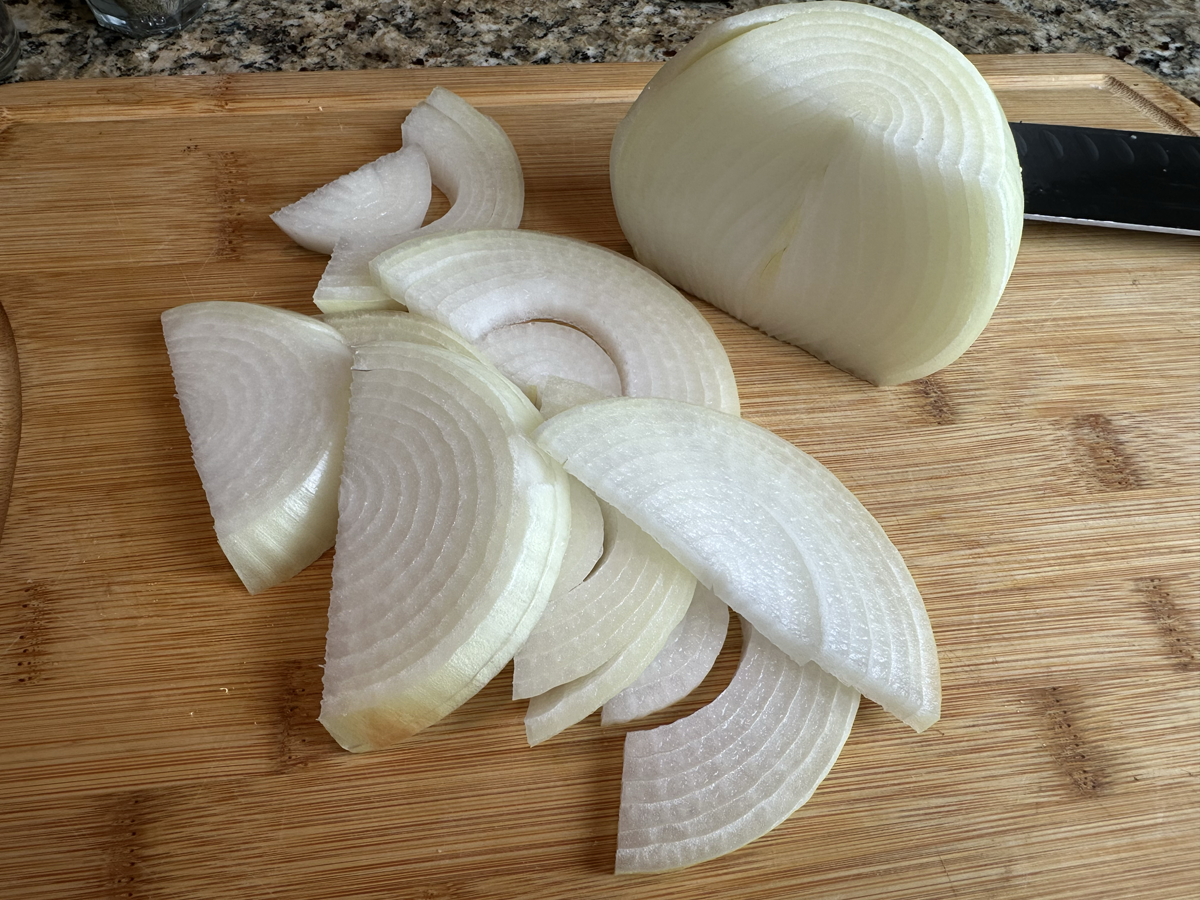
Pro Tip: The onion will form a base for the turkey breast to lift it above the liquids and allow it to roast in the flavorful steam, so don’t cut your onion slices too thin. Clean the onion, cut it in half, and then chop fairly sturdy half moon slices as in the photo.
Now it’s time to add your turkey breast back to your Dutch oven skin side down and sprinkle it with your thyme. The photos below show you the deglazing, the onion saute, and turkey breast resting on the onions. All you have to do now is pop a lid on your Dutch oven and let it roast until it reaches an internal temp of 180 degrees.
Pro Tip: Your total roasting time will vary depending on the size of your turkey breast but will likely take 40 minutes or more. Check it starting at 40 minutes with a good meat thermometer. I like to use a digital instant thermometer to be certain the meat is thoroughly cooked, particularly with poultry.
After removing the turkey breast from the Dutch oven, allow it to rest for about 10 minutes to ensure the juices settle and then slice into serving pieces. If you like onions, pile them on top of your slices, or simply drizzle the pan juices over the meat. Your turkey will be moist, tender and perfectly delicious. And, with only 230 calories and 43 grams of protein per serving, it will be a hit with your weight loss plan!